
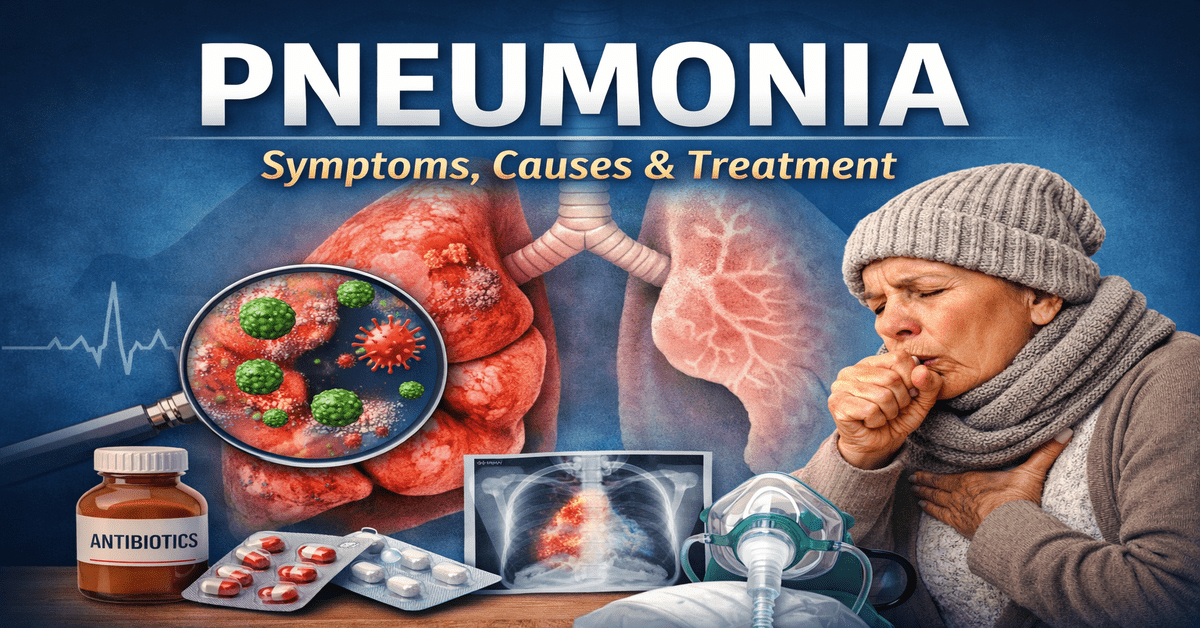
Pneumonia is a frequent but potentially deadly lung infection in the United States that inflames the air sacs, producing coughing, fever, chest pain, and difficulty breathing, and can range from moderate to fatal. With hundreds of thousands of hospital admissions each year and increased dangers when diagnosis and treatment are postponed, it continues to be a serious public health issue. Early identification is essential for monitoring, supportive care, and the quick administration of antibiotics or antivirals, all of which enhance recovery results. Adults over 65, children under five, and those with long-term illnesses including diabetes, heart disease, asthma, or compromised immunity are considered high-risk groups because they are more likely to suffer from serious sickness and require a longer recovery.
What Is Pneumonia?
According to medical definitions, pneumonia is an acute infection of the lung parenchyma caused by microorganisms like bacteria, viruses, or fungi that penetrate the lungs and cause an inflammatory reaction that mainly affects the alveoli, the tiny air sacs that are in charge of gas exchange. Cough, fever, shortness of breath, chest pain, and exhaustion are signs of this illness, which causes the alveoli to become inflamed and fill with fluid or pus, interfering with oxygen passage into the circulation. While influenza (flu) is a viral infection that primarily affects the upper and lower respiratory tract and causes systemic symptoms like body aches and sudden fever, it does not typically fill the alveoli with fluid. In contrast, pneumonia directly infects the lungs and impairs breathing at the alveolar level. The SARS-CoV-2 virus causes COVID-19, which can range in severity from mild upper respiratory symptoms to severe viral pneumonia with widespread lung inflammation. In contrast, bronchitis, which is caused by inflammation of the bronchial tubes rather than the alveoli, usually results in a persistent cough with mucus but less severe impairment of oxygen exchange than pneumonia.
Types of Pneumonia
Depending on the infection’s source and mode of acquisition, pneumonia can be divided into a number of kinds, each with unique clinical characteristics and risk factors. While viral pneumonia, which is caused by viruses like influenza or respiratory syncytial virus (RSV), typically begins with milder symptoms but can worsen or result in secondary bacterial infection, bacterial pneumonia, which is frequently caused by organisms like Streptococcus pneumoniae, tends to develop suddenly and is characterized by high fever, productive cough, and chest pain. Less frequently occurring, fungal pneumonia usually affects those with compromised immune systems or those who reside in areas of the United States like the Southwest, where fungus like Coccidioides are endemic. Aspiration pneumonia, which typically affects older adults, those who have trouble swallowing, or people who are unconscious, happens when food, stomach acid, or saliva is aspirated into the lungs. Hospital-acquired pneumonia and ventilator-associated pneumonia occur during hospital stays or in patients on mechanical ventilation, frequently involving more resistant organisms and posing a higher risk of severe illness and complications. In contrast, community-acquired pneumonia (CAP) develops outside of healthcare facilities and continues to be one of the leading causes of hospitalization.
Causes of Pneumonia
Numerous factors, such as bacteria, viruses, fungus, and even breathed chemicals, can cause pneumonia, an infection of the lungs. While influenza, respiratory syncytial virus (RSV), and COVID-19 are viral culprits, Streptococcus pneumoniae is the most frequent bacterial culprit. Pneumonia can also result from fungal infections like coccidioidomycosis and histoplasmosis, especially in immunocompromised people. Aspirating food, drinks, or vomit into the lungs can also cause pneumonia by introducing pathogenic germs. Smoking, diabetes, compromised immune systems, and chronic lung conditions like COPD are some of the risk factors that make people more susceptible to serious infections. These conditions are particularly common in the United States.
Symptoms of Pneumonia
Early detection is essential because pneumonia symptoms can vary depending on age and general health and can range from minor to life-threatening. Cough, fever, chills, exhaustion, headaches, and shortness of breath with movement are typical early warning signs and mild symptoms; high or persistent fever, rapid or labored breathing, sharp chest pain that gets worse with coughing, bluish lips or fingertips, confusion, and extreme weakness are examples of severe or emergency symptoms. Pneumonia usually appears as a productive cough, fever, chest discomfort, and breathing difficulties in adults; fast breathing, wheezing, fever, poor feeding, vomiting, or irritability in children; and less common symptoms in older adults include confusion, low body temperature, worsening of chronic conditions, or sudden decline in daily functioning, sometimes even in the absence of a high fever. If symptoms worsen quickly, breathing becomes difficult, oxygen levels seem low, chest pain is severe, confusion develops, or pneumonia is suspected in high-risk individuals like infants, older adults, or people with chronic illnesses, immediate medical attention is necessary to prevent serious complications.
How Pneumonia Is Diagnosed in the US
In the US, a methodical clinical strategy that incorporates laboratory and imaging studies with physical examination is used to diagnose pneumonia. A medical professional starts with a physical examination, assessing symptoms, vital signs, and medical history while listening to the lungs for unusual sounds like crackles, wheezing, or diminished breath sounds. While a CT scan may be advised in severe, ambiguous, or complex situations for more thorough imaging, a chest X-ray is frequently used to identify the presence of lung infection or fluid in the air sacs. A sputum culture may be obtained to pinpoint the precise bacterium or organism causing the illness and aid in the prescription of antibiotics. Blood tests are carried out to check for indications of infection and inflammation. Oxygen saturation is commonly measured by pulse oximetry, and in more severe situations, an arterial blood gas test yields accurate data regarding blood levels of carbon dioxide and oxygen. In order to identify the reason and guarantee proper treatment and infection management, COVID-19 and influenza tests may also be carried out when symptoms coincide with viral respiratory diseases.
Treatment Options for Pneumonia
In order to eradicate the infection, alleviate symptoms, and avoid consequences, treatment choices for pneumonia vary depending on the underlying cause, the severity of the sickness, and the patient’s general condition. While viral pneumonia can be treated with antiviral drugs like those used for influenza along with supportive care, bacterial pneumonia is usually treated with antibiotics, which can be administered intravenously in a hospital setting for more severe infections or taken orally at home for mild cases. Fungal pneumonia is more likely in those with compromised immune systems or specific local exposures, and it requires certain antifungal therapies. In addition to rest and sufficient fluid intake, over-the-counter medications such as fever reducers, pain relievers, and cough medicines are frequently advised to assist manage symptoms. In severe cases, hospital care may be necessary, including ventilator support if breathing becomes severely compromised, IV antibiotics, and oxygen therapy to maintain healthy oxygen levels. While recovery times vary in the US, many generally healthy adults start to feel better in one to three weeks. However, weariness and cough may take longer, and older adults or those with chronic diseases may require several weeks to months to fully recover.
Home Care and Recovery Tips
Supporting the body’s healing process, regaining lung function, and avoiding relapse or complications are the main goals of home care and rehab following pneumonia. Sleep aids in the immune system’s recovery, and fluids thin mucus, which facilitates better breathing and more effective coughing. Therefore, getting enough sleep and being hydrated are important. As directed by a healthcare professional, fever and cough should be properly treated with the proper over-the-counter drugs, avoiding needless cough suppression if it aids in clearing mucus from the lungs. During recuperation, mild breathing techniques like deep breathing and controlled coughing can enhance lung expansion, oxygen exchange, and general respiratory strength. Recovery timeframes vary based on age, the severity of the sickness, and general health, but most people can resume work or school once the fever has subsided, breathing is comfortable, and energy levels have greatly improved. In order to track recovery, make sure the infection has completely cleared, evaluate lung function, and handle any residual symptoms or consequences, follow-up treatment with a primary care physician is essential.
Possible Complications
Serious problems can arise from pneumonia, especially if it is severe, untreated, or affects those with compromised immune systems or long-term medical disorders. A lung abscess is a localized pocket of pus within the lung tissue brought on by a prolonged infection, whereas pleural effusion is an accumulation of fluid in the area between the lungs and the chest wall that makes breathing painful and challenging. In more serious situations, pneumonia may result in sepsis, a potentially fatal systemic reaction to infection that, if left untreated, can cause organ failure. When the lungs cannot supply enough oxygen to the bloodstream, respiratory failure may occur, occasionally necessitating artificial ventilation. Particularly in older persons or those with pre-existing lung disease, pneumonia can induce long-term lung scarring in the most severe or chronic episodes, which may permanently impair lung capacity and create persistent breathing difficulties.
Preventing Pneumonia
Vaccination, healthy lifestyle choices, and strong infection-control practices particularly for high-risk groups are the key to preventing pneumonia in the United States. In order to protect against common bacterial causes of pneumonia, immunizations are essential. Pneumococcal vaccines, such as PCV20 and PPSV23, are advised for young children, older adults, and those with specific medical conditions. While COVID-19 vaccinations may prevent severe respiratory illness and pneumonia associated with SARS-CoV-2, annual influenza vaccination is essential because the flu can directly cause pneumonia or weaken the immune system, increasing the risk of secondary bacterial infection. By enhancing lung defense systems and general respiratory health, quitting smoking dramatically lowers the risk of pneumonia. The spread of respiratory infections can be prevented by taking easy steps including practicing good hand hygiene, covering coughs and sneezes, and avoiding close contact with sick people. Furthermore, the immune system is strengthened and the risk of developing severe pneumonia is reduced when chronic illnesses including asthma, COPD, diabetes, and heart disease are adequately managed.
When to See a Doctor
For high-risk patients in particular, knowing when to consult a physician for pneumonia symptoms is essential to avoiding major problems. Severe pneumonia or respiratory failure may be indicated by severe shortness of breath, rapid or laborious breathing, chest pain, high or persistent fever, bluish lips or fingertips, confusion, extreme weakness, or coughing up blood. In these cases, immediate medical assistance is necessary. While the emergency room should be used for severe breathing difficulties, low oxygen levels, abrupt confusion, or evidence of sepsis, urgent care may be suitable for milder but troubling symptoms including worsening cough, fever that does not improve, or growing weariness.Even early or mild symptoms in high-risk individuals, such as older adults, infants, pregnant women, and those with weakened immune systems or chronic illnesses, should be rapidly evaluated by a healthcare professional to ensure fast diagnosis and treatment.
With symptoms and severity ranging from moderate illness to life-threatening consequences, pneumonia is a common but potentially dangerous lung infection that can affect people of all ages. As such, awareness and quick treatment are essential. While CDC-recommended preventive measures like pneumococcal, flu, and COVID-19 vaccinations, quitting smoking, and maintaining good hygiene considerably reduce the risk of infection, early diagnosis is essential to successful treatment, lowering the risk of hospitalization, complications, and long-term lung damage. Early detection of symptoms and immediate medical attention can significantly enhance recovery results and safeguard long-term respiratory health, particularly for high-risk patients such as older adults, small children, and those with chronic diseases.
Yes, some types of pneumonia are contagious, especially those caused by bacteria or viruses such as influenza, RSV, or COVID-19. These infections can spread through respiratory droplets when an infected person coughs or sneezes. However, pneumonia caused by fungi or aspiration is not contagious.
Recovery time varies depending on the severity of the infection, the cause, and the patient’s age and overall health. Many healthy adults begin to feel better within 1 to 3 weeks, but fatigue and cough may persist longer. Older adults and individuals with chronic conditions may require several weeks to months for full recovery.
Early symptoms of pneumonia often include cough, fever, chills, fatigue, headache, and shortness of breath with activity. Detecting these symptoms early is important, especially in high-risk individuals, as prompt treatment can prevent complications and hospitalization.
People at higher risk include adults over 65, children under five, pregnant women, smokers, and individuals with chronic illnesses such as diabetes, heart disease, asthma, COPD, or weakened immune systems. These groups are more likely to experience severe illness and complications.

Dr. Paula Parker is a highly skilled and compassionate general physician dedicated to providing comprehensive healthcare services to patients in Michigan, United States. Dr. Paula Parker earned his Doctor of Medicine (MD) degree from the esteemed University of Michigan Medical School